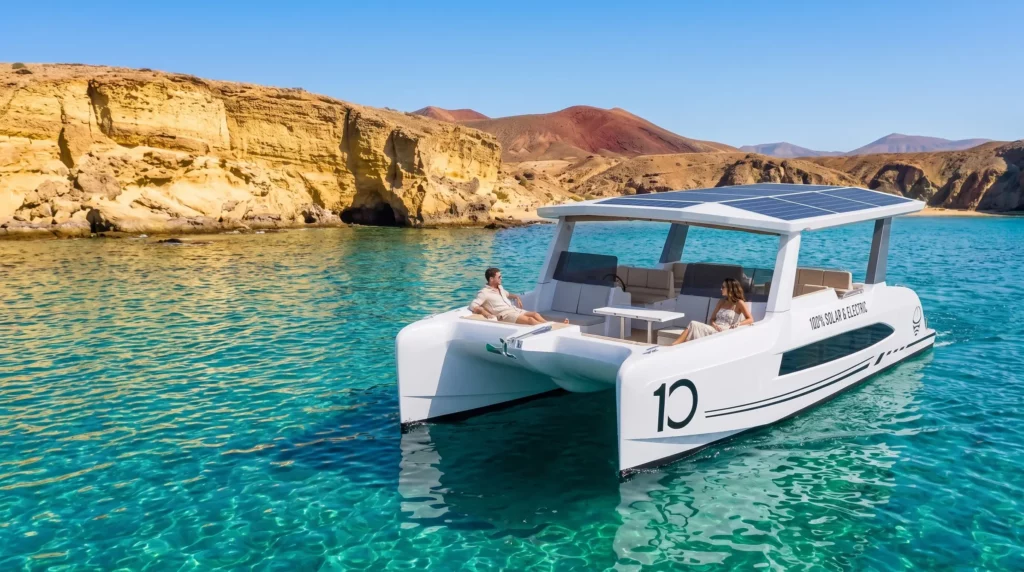
At the southern tip of Lanzarote, east of Playa Blanca, a string of coves of pale sand and turquoise water sits below ochre cliffs. Together they are known as the Papagayo beaches, and they are often described as the most beautiful on the island. They lie inside a protected area, the Los Ajaches Natural Monument, which is why there are no hotels, no promenade and only a dirt track to reach them.
The six coves, from west to east
- Playa Mujeres: the first one you reach and the largest, about 400 metres of sand. It has its own parking area.
- Playa del Pozo: a smaller beach with history. The Norman expedition of Jean de Béthencourt and Gadifer de La Salle landed nearby in 1402, at the start of the conquest of the Canary Islands; remains of San Marcial del Rubicón are close by. No parking of its own.
- Playa de la Cera: a small cove a minute’s walk from the beach bars.
- Playa de Papagayo: the one on the postcards, a half-moon of sand enclosed by two headlands, well sheltered from the wind. Beach bars sit on the cliff above, reached by a short climb.
- Puerto Muelas: facing east and more exposed to the wind, at its best on hot, windless days. Traditionally a naturist beach.
- Caleta del Congrio: the furthest from Playa Blanca, with no bars at all, next to the Papagayo campsite.
Getting there by road
Cars enter through a booth in the valley of Los Ajaches, where a fee of 3 euros per vehicle is charged as a contribution to the upkeep of the track. The road is unpaved and bumpy: drive slowly and allow time. In summer and at weekends the parking areas fill up from late morning.
Getting there on foot
A coastal path of about 5 kilometres links Las Coloradas, at the eastern end of Playa Blanca, to the coves. It is an easy walk but there is no shade at all: take water, a hat, and start early.
Getting there by sea
Seen from the water, Papagayo makes even more sense: the cliffs, the colours of the rock and the coves open up one after another. A boat can also stop where the snorkelling is best, at the rocky ends of the coves, rather than on the busiest stretch of sand.
That is the idea behind our Papagayo Experience: five hours from Puerto Calero along the south coast, with swimming stops, snorkelling and paddle board, lunch and drinks aboard, in the shade of the solar roof. The boat is electric, so the anchorage stays quiet. Stops always depend on the sea and the wind on the day.
Practical tips
- Shade: there is none on the beaches. Bring a sun hat and protection, or plan the hottest hours elsewhere.
- Water and food: only Playa de Papagayo and Playa de la Cera have beach bars nearby.
- Snorkelling: the most interesting spots are along the rocks at each end of the coves.
- Respect the protected area: take all rubbish away with you and stay on the marked tracks.
How much does it cost to visit the Papagayo beaches?
The beaches themselves are free. Cars pay 3 euros at the entrance of the Los Ajaches Natural Monument, as a contribution to the upkeep of the dirt track.
Which Papagayo beach is best for families?
Playa Mujeres has the most space and its own parking, and Playa de Papagayo is the most sheltered from the wind. On a windy day, choose the coves facing south.
Can you reach Papagayo by boat from Puerto Calero?
Yes. Our Papagayo Experience leaves Puerto Calero at 10:30 and returns around 15:30, with swimming and snorkelling stops in the coves.